


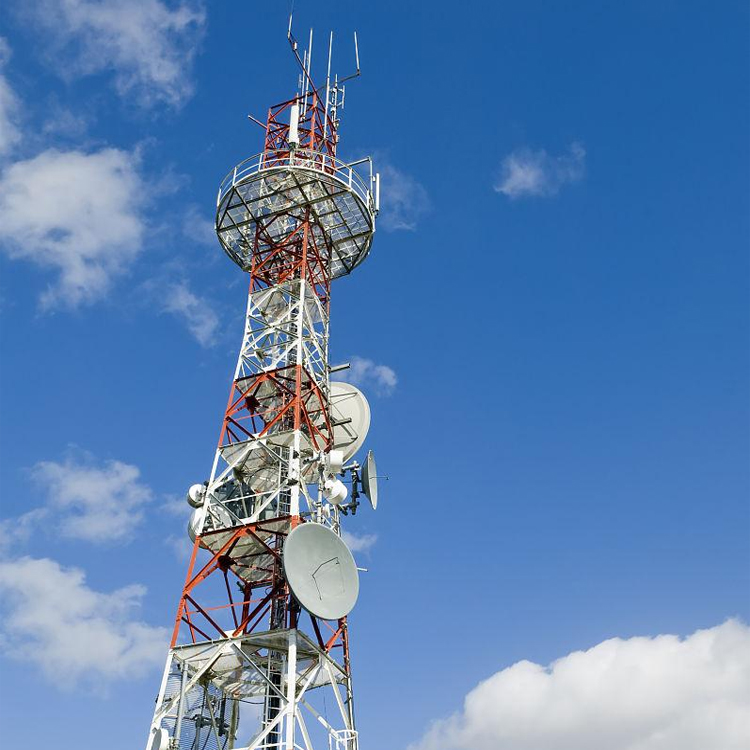
A telecom tower is a tall, load‑bearing structure that elevates antennas, microwave dishes, and radio equipment to deliver signal transmission and reception for cellular communication across the target coverage area. Towers are engineered around wind load, seismic activity, antenna payload, and required radio coverage radius, so structural type and connection details are just as critical as the steel material itself.
Hengshui Yuanming Steel Structure Co., Ltd. manufactures telecom tower structures at Guangchuan Industrial Zone, Jing County, Hengshui City, Hebei Province, China. We serve network operators, EPC contractors and tower infrastructure enterprises worldwide.
Self‑supporting lattice towers – three‑ or four‑legged space frames standing without guy wires; suitable for sites with limited land and heavy antenna payloads. Guyed masts – lightweight, cost‑effective structures anchored by tensioned cables; widely adopted for taller heights and remote locations. Monopoles – single tubular poles with a small footprint, commonly specified for urban and roadside cell sites. Rooftop and camouflaged structures – poles, frames and outer shrouds engineered for space‑restricted or visually sensitive locations.
A full tower supply scope generally includes mast or lattice body, tower legs and bracing, base plates and anchor bolt assemblies, climbing ladders & safety rails, antenna mounting frames, cable ladders/trays, and platform supports. Design coordination also covers bolt grades, galvanizing thickness, and the interface between tower base and concrete foundation.
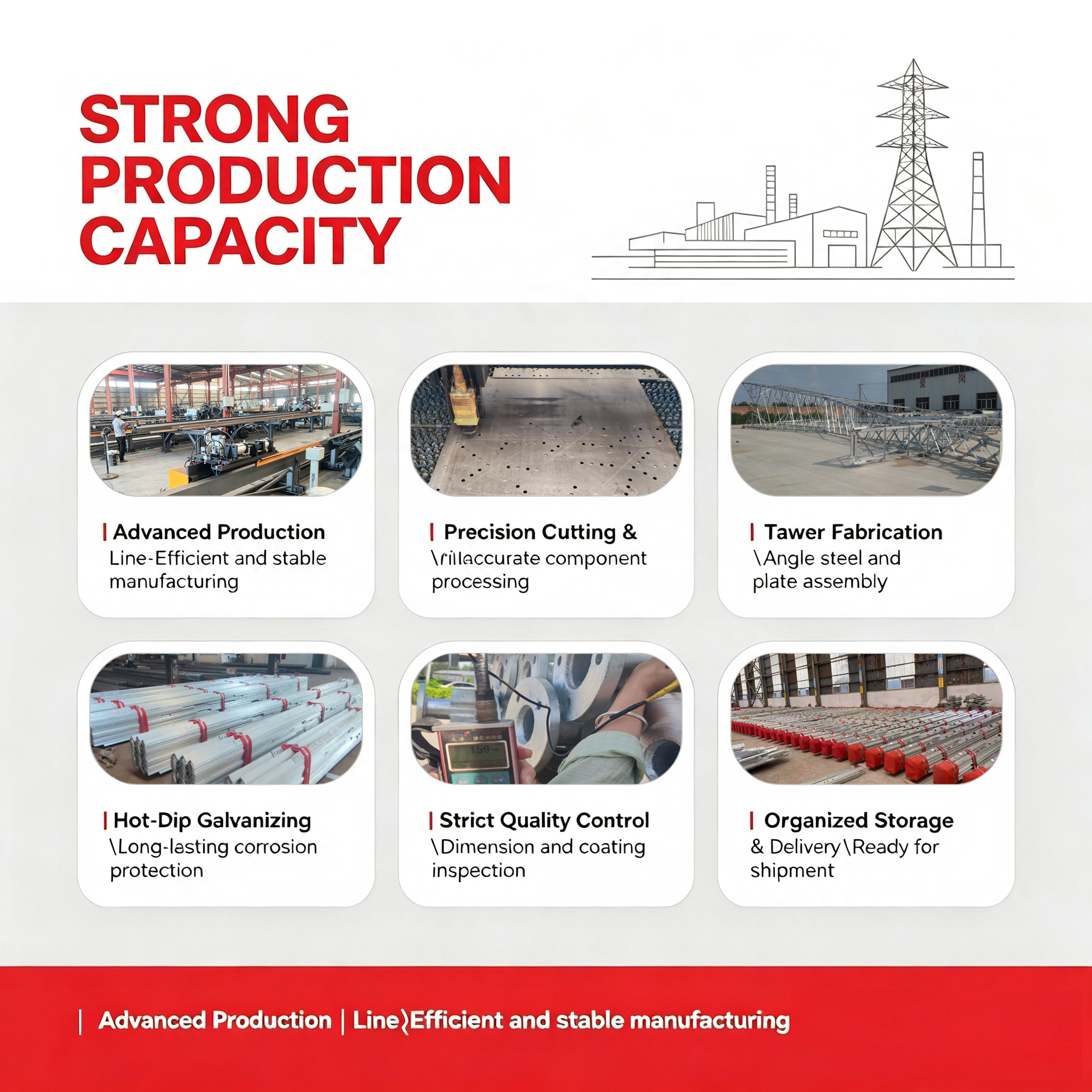
Steel grade and cross‑section selection based on project wind speed, ice load and antenna payload. Hot‑dip galvanizing treatment to provide corrosion resistance for coastal, humid and industrial environments. Bolted connections for convenient field assembly; factory pre‑assembly inspection available when applicable. Precise dimensional control for leg spacing, flange flatness and hole alignment to guarantee smooth on‑site erection. Full traceability of material certificates and inspection records throughout production.
Our telecom towers are mainly deployed for cellular macro cell sites, rural mobile coverage expansion, microwave backhaul links, private radio networks, temporary and emergency communications. The same structural design concept can also be applied to broadcast masts and monitoring towers requiring elevated platforms or antenna arrays.
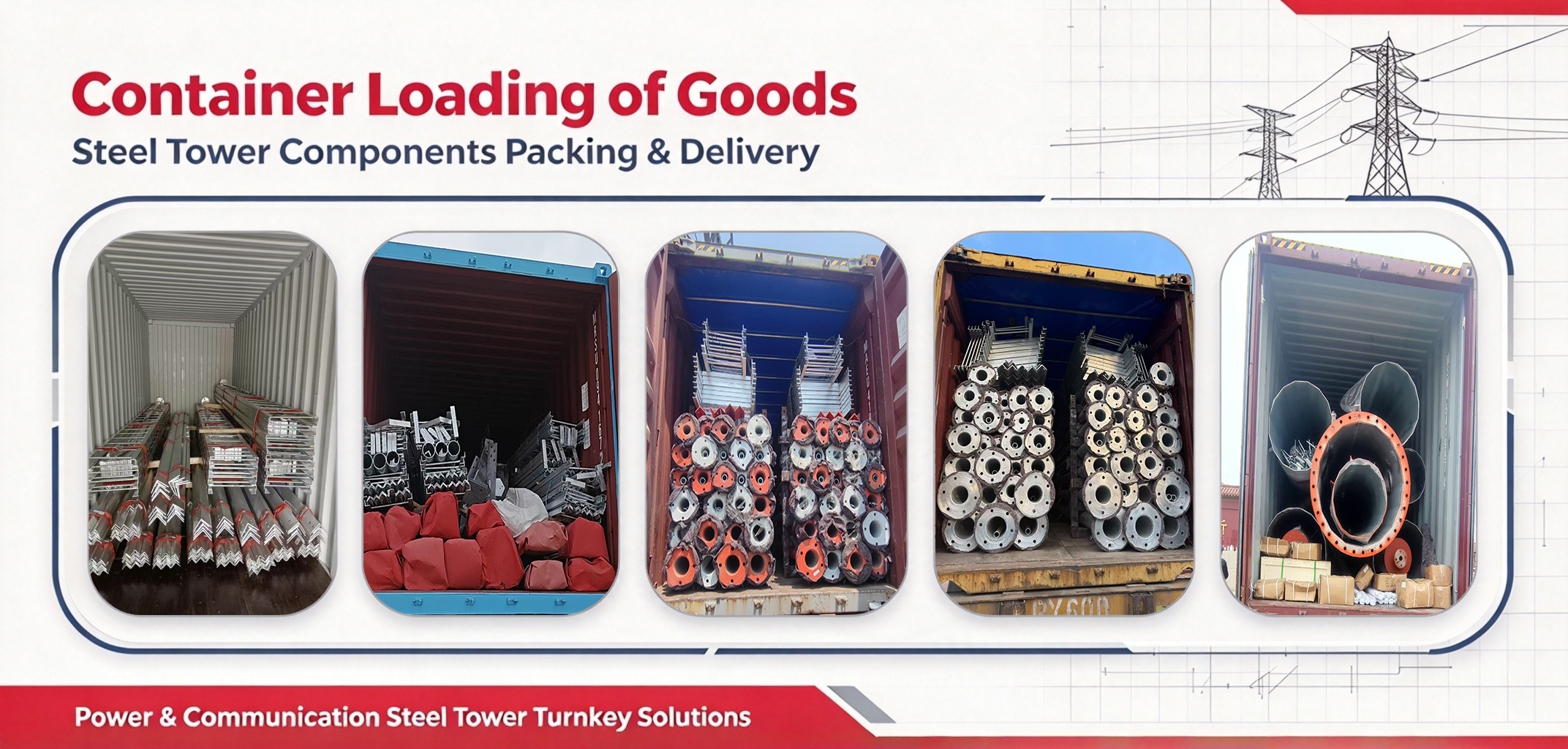
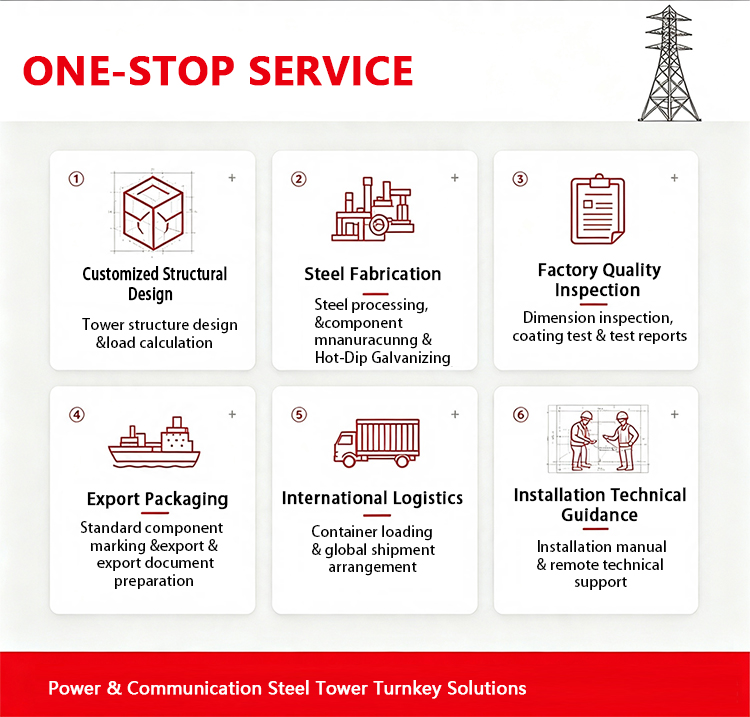
For an accurate quotation, the manufacturer requires tower height, structure type, design wind speed, antenna & dish payload, specified galvanizing standard, plus any site‑specific foundation and interface requirements. Drawings, bill of quantities or reference tower designs help verify leg spacing, bracing layout and connection details prior to production. Buyers are recommended to confirm packing and container loading plans, as long tower segments and platforms will impact shipping volume.
Submit tower drawings, height, loading data and order quantity to get our fabrication & supply proposal. Past project references and material documentation can be provided upon request.
Item
Specification
Design Software
MS TOWER, ASM TOWER, PLS TOWER, SAP2000, etc.
Wind Speed
0–330 KM/H
Design Standard
TIA/EIA-222-G/F/H
Material
GB/T700: Q235B
GB/T1591: Q355B, Q355C, Q355D, Q420
ASTM A36, ASTM 572, GR50, GR65, SS400
EN 10025: S235JR, S235JO, S235JZ
EN 10025: S355JR, S355JO, S355JZ
Certificate
ISO9001, SGS COC
Galvanized
Hot-dipped Galvanized
Galvanization Standard
ASTM A123
Nuts & Bolts
Grade 8.8,ASTM A325M Type1 (830MPa)
Welding Standard
AWS D1.1
Welding Method
CO₂ Shielded Arc Welding; Submerged Arc Welding (SAW)
Bolts & Nuts Galvanization Standard
ISO 1461 or ASTM A153
Supply Ability
5,000 MT per month

.png "Telecom tower")
.jpg "Telecom tower")
.jpeg "Telecom tower")
.jpeg "Telecom tower")

 Scan to chat on WeChat


